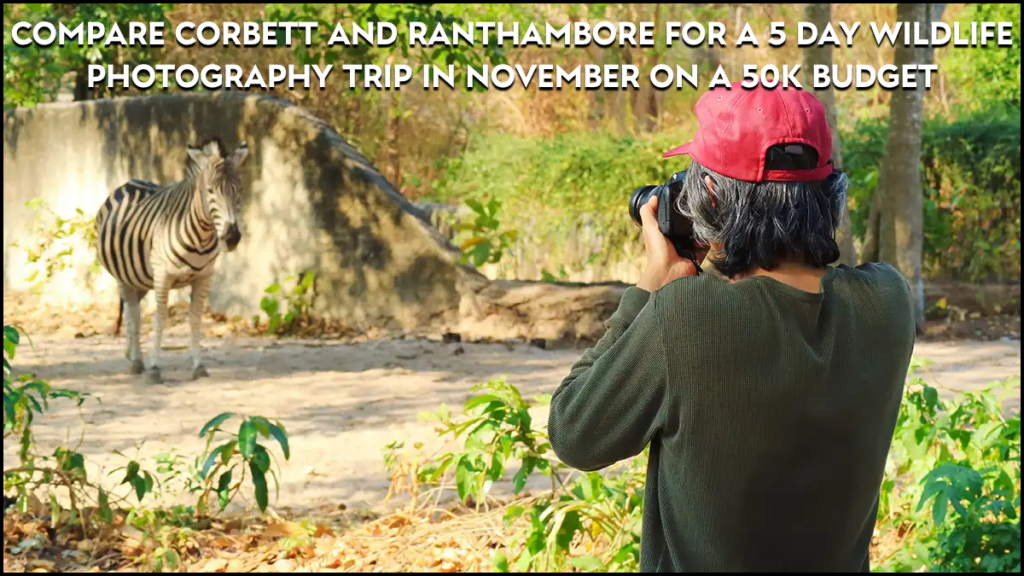

Planning a wildlife photography journey in India is both exciting and challenging, especially when the goal is to balance budget, time, and photographic outcomes. Among the most popular destinations, Jim Corbett National Park and Ranthambore National Park consistently stand out as top choices for photographers seeking raw wildlife encounters and dramatic landscapes. When travelers try to compare corbett and ranthambore for a 5 day wildlife photography trip in november on a 50k budget, they are essentially choosing between two completely different visual storytelling environments.
November is widely considered one of the best months for wildlife photography in India because of stable weather conditions, improved visibility, and increased animal activity after the monsoon season. Forests remain fresh, skies are clear, and early morning mist creates cinematic opportunities. However, both parks behave differently in November, which makes the decision highly dependent on photography style and expectations.
For photographers working within a 50K INR budget, planning becomes even more critical. Costs for safaris, accommodation, and travel must be carefully balanced to maximize shooting time in the forest. Corbett and Ranthambore both offer excellent experiences within this budget, but the final outcome depends on strategic decisions such as safari zones, timing, and gear preparation.
Jim Corbett National Park Wildlife Photography Experience
Jim compare corbett and ranthambore for a 5 day wildlife photography trip in november on a 50k budget. It is surrounded by dense Himalayan foothills, which create a unique environment for wildlife photography. The park is especially famous for its thick forests, river landscapes, and unpredictable wildlife movements, which make every safari a different experience.
When photographers enter Corbett, they are immediately surrounded by a deep green ecosystem filled with tall sal trees, rivers, and grasslands. This dense environment creates a natural challenge for wildlife spotting but rewards photographers with extremely atmospheric images. Misty mornings in November often transform the forest into a cinematic scene where light filters through trees, creating dramatic depth.
The park is divided into multiple safari zones, each offering a different photographic experience. Dhikala zone is considered the most premium and visually rich area, where elephants, deer, crocodiles, and occasionally tigers can be spotted. Bijrani zone is known for its dense forest and balanced wildlife activity, while Jhirna remains accessible throughout the year and offers more consistent sightings.
In terms of photography, Corbett is not just about big cat sightings but about storytelling. Birds, reptiles, elephants, and forest textures play a major role in building a strong wildlife portfolio. This makes Corbett especially valuable for photographers who enjoy environmental storytelling rather than only focusing on tiger portraits.
When travelers compare corbett and ranthambore for a 5 day wildlife photography trip in november on a 50k budget, Corbett often appeals more to those who prefer patience-based photography and natural forest aesthetics rather than open-field sightings.
Ranthambore National Park Wildlife Photography Experience
Ranthambore National Park, located in Rajasthan, offers a completely different wildlife photography environment compared to Corbett. The terrain is dry, open, and visually dramatic, featuring rocky hills, lakes, and ancient ruins. This structure makes wildlife spotting significantly easier and more visually rewarding for photographers.
One of the biggest advantages of Ranthambore is its high probability of tiger sightings. The open landscape allows photographers to track movement more easily compared to dense forests. Tigers are often seen near water bodies, open fields, and even around historic structures inside the park, making it a dream destination for big cat photography.
The park is divided into multiple safari zones, compare corbett and ranthambore for a 5 day wildlife photography trip in november on a 50k budgetwith Zones 1 to 5 being the most popular for tiger activity. Each zone has its own unique landscape features. Some zones include lakes such as Padam Talao, while others include cliff structures and forest patches that provide cinematic framing opportunities for wildlife shots.
November is one of the best months to visit Ranthambore because the weather becomes pleasant and vegetation begins to thin out, improving visibility. Morning light in Ranthambore is particularly stunning, casting golden tones over the dry landscape and enhancing subject contrast in photographs.
When photographers compare corbett and ranthambore for a 5 day wildlife photography trip in november on a 50k budget, Ranthambore often wins for those who prioritize guaranteed tiger sightings and high-impact wildlife action shots.
Corbett vs Ranthambore Photography Comparison
The comparison between Corbett and Ranthambore is not about which park is better overall but about which park suits a photographer’s style. Corbett focuses on dense forest ecosystems, while Ranthambore focuses on open terrain and high visibility wildlife encounters.
In Corbett, photography is often unpredictable. You may spend hours without major sightings, but when wildlife appears, the results are deeply rewarding. The forest environment adds layers, depth, and emotion to images. Mist, shadows, and river reflections create artistic compositions that are difficult to replicate elsewhere.
Ranthambore offers more structured photography opportunities. Wildlife sightings are more frequent, and tigers are easier to locate due to open terrain. This allows photographers to focus more on composition and timing rather than searching for animals.
Biodiversity also differs significantly. Corbett offers a wider variety of species including elephants and birds, while Ranthambore is more focused on big cats and dry forest species. This affects the type of photography portfolio a traveler can build in each park.
For anyone trying to compare corbett and ranthambore for a 5 day wildlife photography trip in november on a 50k budget, the key difference is simple: Corbett is about storytelling, Ranthambore is about action.
Photography Itinerary for 5 Days Wildlife Trip
A well-planned 5-day itinerary can significantly improve photography results in both parks. In Corbett, the ideal plan includes multiple safaris in Dhikala and Bijrani zones. Early morning safaris are prioritized for misty lighting conditions, while evening safaris offer golden forest tones.
A typical Corbett plan includes arrival and orientation on day one, followed by consecutive safari sessions across different zones. Staying close to safari gates helps reduce travel time and increases rest periods between shoots. Reviewing images after each safari is also important for improving composition strategy.
In Ranthambore, the 5-day structure focuses heavily on repeated safaris in high-activity zones. Photographers often revisit zones based on recent tiger movement reports. This increases chances of capturing dynamic wildlife behavior rather than static sightings.
The itinerary also includes buffer time for gear maintenance and travel adjustments. Wildlife photography is physically demanding, and rest periods are essential for maintaining focus and energy throughout the trip.
Many photographers who compare corbett and ranthambore for a 5 day wildlife photography trip in november on a 50k budget often adjust itineraries based on real-time safari reports to maximize success rate.
Budget Planning for 50K Wildlife Photography Trip
A 50K INR budget is sufficient for a well-planned wildlife photography trip if managed properly. The largest expense is safari bookings, followed by accommodation and travel.
In Corbett, budget stays near the park are widely available, offering basic comfort and proximity to safari gates. Gypsy safaris are preferred for photography due to flexibility and better positioning opportunities. Advance booking is essential to secure preferred zones.
In Ranthambore, accommodation options range from budget guesthouses to mid-range resorts. Since demand is higher in November, prices may increase slightly. Safari costs are also higher due to popularity, especially for premium zones.
Travel expenses depend on the starting location, but both parks are well connected by road and rail networks. Food costs remain moderate in both destinations, allowing photographers to allocate more budget toward safaris.
When travelers compare corbett and ranthambore for a 5 day wildlife photography trip in november on a 50k budget, Ranthambore may feel slightly more expensive due to demand, while Corbett offers more budget flexibility.
Best Photography Tips for November Safari
November offers ideal lighting conditions for wildlife photography. Early mornings in Corbett often produce misty environments that add mood and depth to images. In contrast, Ranthambore provides strong golden light that enhances subject clarity.
Camera settings play a crucial role in capturing wildlife action. High shutter speeds are necessary for moving animals, while continuous autofocus helps maintain sharp focus. Telephoto lenses are essential for capturing distant subjects safely and effectively.
Composition is equally important. In Corbett, photographers should focus on environmental framing using trees and water. In Ranthambore, subjects can be isolated more easily due to open backgrounds, allowing cleaner compositions.
Ethical photography must always be followed. Maintaining safe distance from wildlife ensures safety for both animals and photographers. Respecting park rules also improves long-term photography opportunities.
Common Mistakes in Wildlife Photography Trips
One of the most common mistakes is poor planning of safari zones. Without proper research, photographers may end up in low-activity areas, reducing chances of sightings. compare corbett and ranthambore for a 5 day wildlife photography trip in november on a 50k budgetAdvance planning is critical for both parks.
Another mistake is ignoring weather conditions. Even in November, Corbett mornings can be cold and foggy, while Ranthambore afternoons can be extremely bright. Understanding light behavior is essential for capturing quality images.
Overpacking gear is also a common issue. Carrying too much equipment reduces mobility during safaris. A lightweight, focused setup is always better for wildlife photography.
Last-minute safari bookings often result in missed opportunities, especially during peak season. Early reservations are necessary for securing prime zones.
Final Verdict on Corbett vs Ranthambore
Both Corbett and Ranthambore offer exceptional wildlife photography experiences, but they serve different creative goals. Corbett is ideal for photographers who enjoy immersive forest storytelling, atmospheric shots, and biodiversity exploration.
Ranthambore is best suited for photographers who want higher chances of tiger sightings, open landscapes, and dramatic wildlife action. It provides more predictable results in terms of big cat photography.
When you compare corbett and ranthambore for a 5 day wildlife photography trip in november on a 50k budget, the final choice depends on whether you value artistic forest photography or high-probability tiger encounters.
FAQs
Which is better for tiger photography Corbett or Ranthambore
Ranthambore is better for tiger photography due to open terrain and higher visibility compared to dense forests in Corbett.
Is 50K enough for a wildlife photography trip in India
Yes, 50K INR is enough for a 5-day trip if safaris and accommodation are planned in advance.
What is the best time for safari photography in November
Early morning safaris offer the best lighting and wildlife activity in both parks.
Which park offers better landscapes for photography
Corbett offers forest and river landscapes, while Ranthambore offers dry terrain with ruins.
How many safaris should be done in 5 days
Around 4 to 6 safaris are ideal for balanced wildlife photography results.
Can beginners do wildlife photography in these parks
Yes, both parks are suitable for beginners with basic photography knowledge.
Which zones are best for sightings
Dhikala in Corbett and Zones 1 to 5 in Ranthambore are best for wildlife sightings.